If you’re comparing LED display screens, you’ve probably seen specs like IP65, IP54, or IP67. These numbers matter more than most people realize. The wrong IP rating can lead to water damage, dust buildup, early failures, and expensive downtime.
This guide explains:
- What IP rating means
- How to read IP codes
- Which IP rating you need for indoor vs outdoor LED displays
- Common mistakes buyers make
- How to choose the right protection level for your project
What Is an IP Rating?
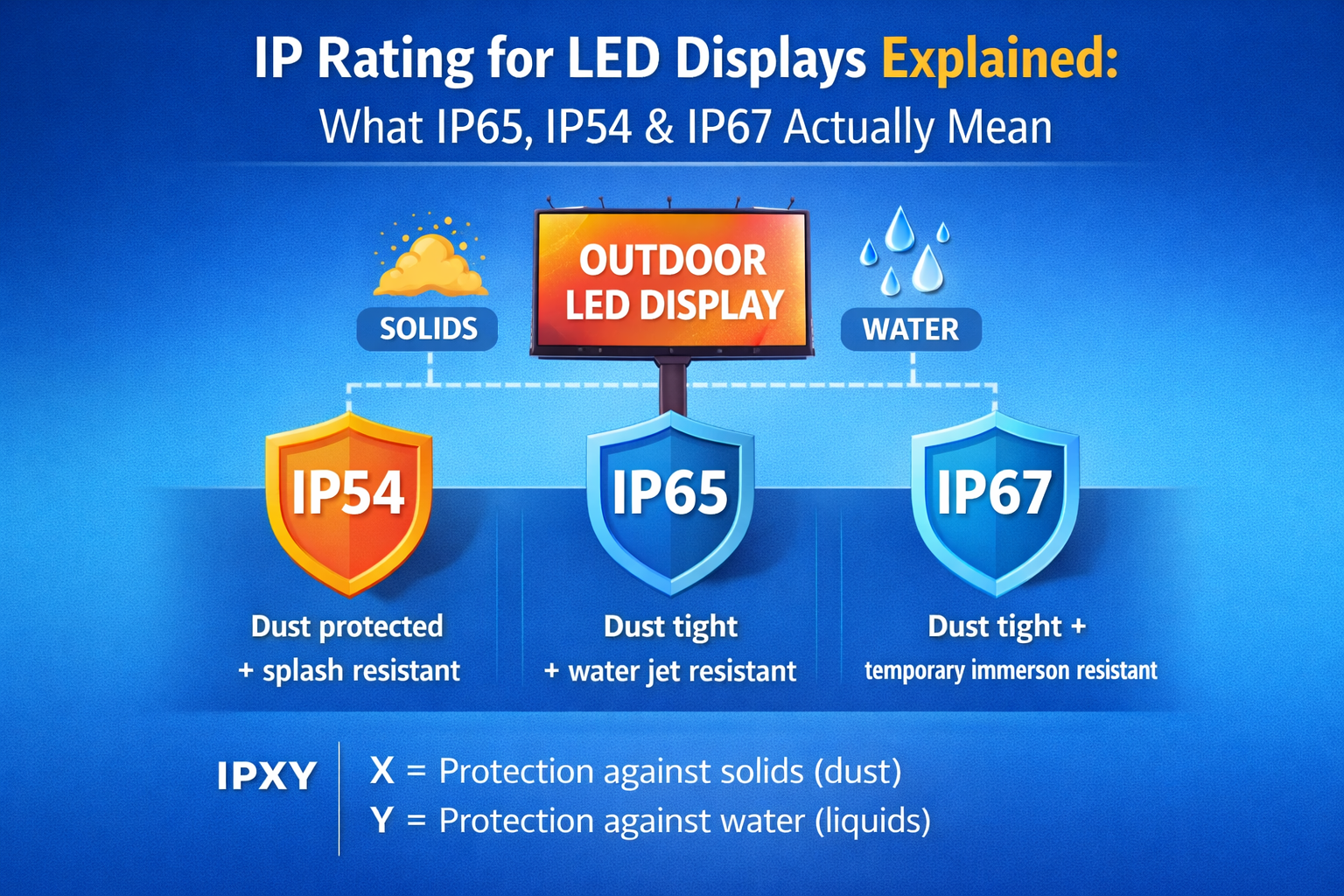
An IP rating (Ingress Protection rating) tells you how well an electronic device is protected against dust (solid particles) and water (liquids). It’s written as IPXY, where:
- X = protection against solids (dust)
- Y = protection against liquids (water)
For LED display screens, IP ratings are critical because these systems often operate 24/7 in environments with dust, humidity, rain, or cleaning sprays.
How to Read IP Codes (IP65, IP54, IP67)
Here’s what the two digits mean:
First Digit (Solids Protection):
- 5 = Dust protected (limited dust ingress allowed)
- 6 = Dust tight (no dust ingress)
Second Digit (Liquids Protection):
- 4 = Splashing water
- 5 = Water jets
- 7 = Temporary immersion
So:
- IP54 = limited dust protection + splash resistance
- IP65 = dust tight + protected against water jets
- IP67 = dust tight + temporary immersion protection
Why IP Rating Matters for LED Displays
1) Prevents Environmental Damage
Dust and moisture can damage LED modules, power supplies, and controllers. A proper IP rating prevents corrosion and electrical shorts.
2) Reduces Downtime & Maintenance
Better protection means fewer failures and less frequent servicing — especially important for public-facing displays.
3) Ensures Long-Term Reliability
Outdoor and semi-outdoor LED screens live in harsh conditions. IP ratings are a big factor in how long your display will last.
Which IP Rating Do You Need?
Indoor LED Displays
Most indoor LED display screens operate in controlled environments (malls, offices, showrooms). These usually require moderate IP ratings because they’re protected from rain and dust.
Best for:
- Corporate lobbies
- Retail interiors
- Experience centers
- Control rooms
Outdoor LED Displays
Outdoor LED display screens face rain, dust, heat, and sometimes direct water jets during cleaning. These require high IP ratings to survive real-world conditions.
Best for:
- Billboards
- Building facades
- Stadiums
- Public advertising
Semi-Outdoor / Glass-Facing Installations
Displays near entrances, atriums, or glass areas may be exposed to humidity and splashes. Projects that combine transparent LED display solutions on glass with solid-wall displays nearby should align IP ratings across zones to ensure consistent reliability.
Common IP Ratings You’ll See on LED Displays
| IP Rating | What It Protects Against | Typical Use |
|---|---|---|
| IP54 | Dust + splashes | Indoor public areas |
| IP65 | Dust tight + water jets | Outdoor displays |
| IP67 | Dust tight + immersion | Special environments |
Tip: Outdoor LED displays often need higher front-side IP protection than the rear, depending on mounting and exposure.
Common Mistakes Buyers Make
- Choosing low IP ratings for outdoor installations
- Assuming “semi-outdoor” doesn’t need water protection
- Ignoring rear-side protection when mounting near walls
- Not considering cleaning methods (water jets need higher protection)
- Overpaying for extreme IP ratings where they aren’t needed
How to Choose the Right IP Rating for Your Project
Ask these questions before finalizing specs:
- Is the display fully indoor, semi-outdoor, or outdoor?
- Will it face rain, dust, or cleaning sprays?
- Is the rear of the display exposed?
- What’s the local climate (humidity, dust levels)?
- Will maintenance teams use water to clean the surface?
If your project mixes environments (e.g., storefront glass + exterior wall), compare transparent LED display solutions with outdoor LED display screens to match protection levels correctly.
Final Thoughts
IP rating isn’t just a technical detail — it directly impacts performance, reliability, and total cost of ownership for LED display screens. Choosing the right IP protection helps your indoor displays stay clean and your outdoor displays survive real-world weather without frequent repairs.
If you’re planning a project, compare indoor LED display screens and ip-rating-for-led-displays based on their IP ratings before you decide.