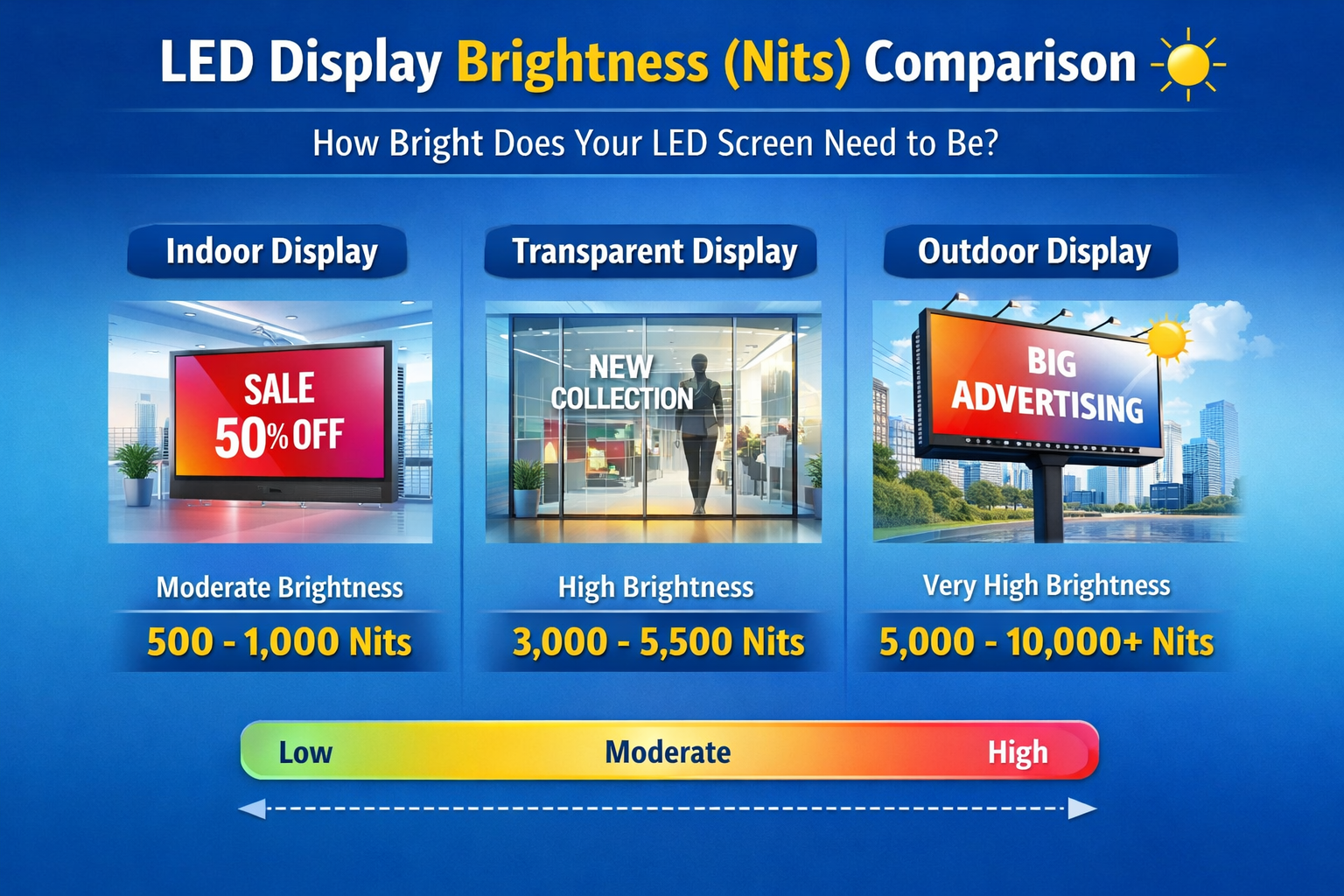
When researching LED display screens, one technical specification appears everywhere: brightness, usually measured in nits. Many buyers assume that higher brightness is always better — but that’s not always true.
Choosing the wrong brightness level can lead to poor visibility, unnecessary power consumption, glare for viewers, or even long-term performance issues. In this guide, we’ll explain what brightness (nits) in LED displays means, why it matters, and how to choose the right brightness level for transparent LED displays, indoor LED video walls, and outdoor LED display screens.
What Is Brightness (Nits) in LED Displays?
Brightness refers to how much light an LED display emits. It is measured in nits, which represent the amount of light output per square meter of the display surface.
In simple terms:
Higher nits = brighter LED screen
Brightness determines how clearly your content can be seen under different lighting conditions, such as indoor lighting, storefront glass with sunlight, or outdoor daylight.
Why Brightness Matters in LED Displays
1. Visibility in Different Environments
An LED display installed in a bright environment needs higher brightness to remain visible. For example, displays placed near windows or on glass facades compete with natural sunlight.
2. Content Readability
Text, logos, and videos must remain clear and readable. If brightness is too low, content looks washed out. If it’s too high for indoor spaces, it can cause glare and discomfort.
3. Viewer Comfort
Excessively bright LED displays in indoor environments can strain the eyes, especially in offices, showrooms, and experience centers where people spend longer time near the screen.
Brightness Requirements by LED Display Type
Transparent LED Displays
Transparent LED displays are commonly installed on glass storefronts and building facades. Since sunlight passes through the glass and the LED structure itself, these displays require higher brightness to remain visible during the day.
Transparent LED screens are ideal for modern retail windows and commercial buildings where you want digital content without blocking visibility.
Indoor LED Displays
Indoor LED displays are typically installed in controlled lighting environments such as showrooms, corporate lobbies, conference rooms, and experience centers. These spaces do not require extremely high brightness.
Using very high brightness indoors can cause glare and unnecessary power consumption.
Outdoor LED Displays
Outdoor LED displays are exposed to direct sunlight and must remain visible during the day. This means they require significantly higher brightness compared to indoor displays.
Outdoor LED screens are commonly used for billboards, building facades, stadiums, and public advertising.
How Much Brightness Do You Really Need?
There is no one-size-fits-all brightness level. The right brightness depends on where and how the LED display will be used.
Here’s a general guideline:
| Installation Environment | Typical Brightness Requirement |
|---|---|
| Indoor spaces | Moderate brightness |
| Glass storefronts / facades | Higher brightness |
| Outdoor daylight environments | Very high brightness |
Instead of choosing the highest brightness available, match the brightness level to your environment. This improves performance and reduces unnecessary energy usage.
Common Mistakes When Choosing LED Display Brightness
- Choosing extremely high brightness for indoor LED displays
- Underestimating brightness needed for glass storefront installations
- Ignoring sunlight direction and ambient lighting
- Not considering power consumption and heat generation
- Assuming higher brightness always means better quality
How to Choose the Right Brightness for Your LED Display Project
Before finalizing your LED display, consider:
- Installation location: indoor, glass facade, or outdoor
- Ambient light conditions: how much natural light hits the screen
- Viewing distance: closer viewing requires balanced brightness
- Content type: text and detailed visuals need better contrast
- Operating hours: higher brightness increases power usage over time
Consulting with an LED display expert can help you avoid over-specifying brightness and overspending on hardware you don’t need.
Brightness vs Other LED Display Specifications
Brightness works together with other important specifications such as:
- Pixel pitch (affects clarity and viewing distance)
- Refresh rate (affects smoothness and camera flicker)
- Contrast ratio (affects image depth and readability)
Balancing all three ensures your LED display performs well in real-world conditions, not just on a spec sheet.
Final Thoughts
Brightness (nits) is one of the most important factors when selecting an LED display — whether you’re installing a transparent LED screen on a glass storefront, an indoor video wall in a showroom, or an outdoor LED billboard.
Choosing the right brightness ensures your content remains visible, comfortable to view, and energy-efficient over the long term.
If you’re unsure what brightness level is right for your project, contact Gleam LED for expert guidance.