Author: Umesh

  • The Essential Buyer’s Guide: 5 Things to Know Before Investing in an LED Video Wall

    The Essential Buyer’s Guide: 5 Things to Know Before Investing in an LED Video Wall

    Are you looking to upgrade your business space with a high-impact digital display? Whether it’s for a corporate boardroom, a retail storefront, or a large-scale outdoor billboard, an LED video wall is one of the most powerful communication tools available in 2026.

    However, for many business owners, the technical jargon can be overwhelming. To help you make a smart investment, we’ve broken down the five most important factors to consider before you buy.

    1. Understanding Pixel Pitch (The “Clarity” Factor)

    Pixel pitch (the distance between the center of two LED pixels) is the most important spec you’ll encounter.

    • The Rule of Thumb: The closer your audience is to the screen, the smaller the pixel pitch should be.
    • For an indoor led video wall, you’ll likely want a “fine pitch” (like P1.8 or P2.5) for crisp text. For an outdoor led wall, a larger pitch (like P4 or P6) is often sufficient since viewers are further away.

    2. Brightness: Nits vs. Lumens

    Unlike projectors that are measured in lumens, LED displays are measured in Nits.

    • Indoor displays typically need 600–1,200 Nits to look vibrant.
    • Outdoor displays require at least 5,000–7,000 Nits to remain visible under direct Indian sunlight. Choosing a screen with “Adaptive Brightness” can help save on electricity by dimming the screen at night.

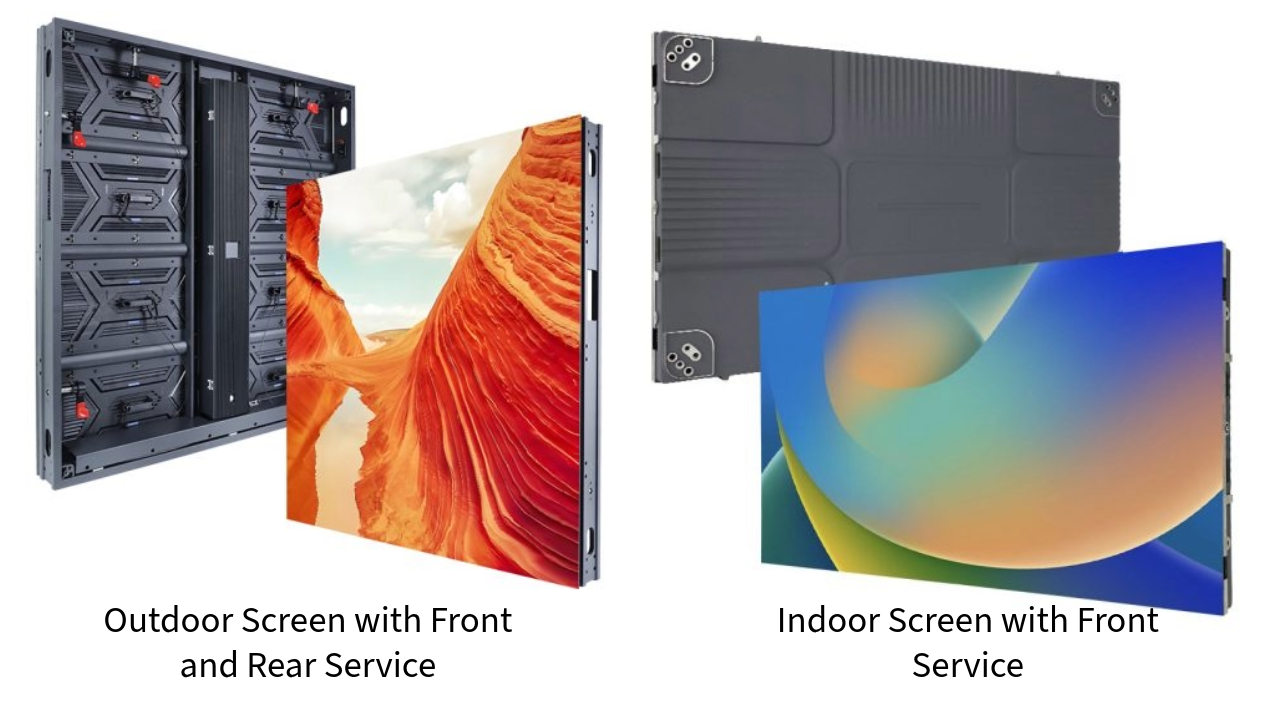
    3. Front vs. Rear Serviceability

    How will you maintain your screen?

    • Front Access: Ideal for indoor led wall installations where the screen is mounted directly against a wall. Modules can be popped out from the front for quick repairs.
    • Rear Access: Common for large outdoor billboards where there is a walkway behind the screen for technicians.

    4. Lifespan and the “Binning” Process

    A quality led display wall India installation should last over 100,000 hours (about 10 years). To ensure the colors stay consistent over time, ask your provider if the LEDs come from the same “bin.” This ensures that every module has the exact same color temperature and brightness.

    5. Content Management: The Brain of the Display

    The hardware is only half the story. You need a reliable Content Management System (CMS) to schedule your ads and videos. Modern systems allow you to update your led video wall india remotely from your phone or laptop, ensuring your messaging is always fresh.

    Conclusion

    Investing in a led video wall display is about more than just buying a screen; it’s about choosing a partner who understands your vision. From the indoor led screen price to the final installation, make sure you prioritize quality and local support.

    Not sure which pixel pitch is right for your space? Check out our Full Product Catalog or contact us at +919881901487 for a free site survey.
  • How LED Screens in iPhone & Samsung Mobiles Are Different from Commercial LED Displays

    How LED Screens in iPhone & Samsung Mobiles Are Different from Commercial LED Displays

    LED screens are everywhere today — from the smartphone in your hand to massive digital screens in malls, offices, and outdoor billboards.
    At first glance, it may seem like the LED screen used in an iPhone or Samsung mobile is similar to a commercial LED display. However, both technologies are designed for completely different purposes.

    In this blog, we’ll clearly explain the difference between mobile LED displays and commercial LED screens, so you can understand why they are not interchangeable and where each one is best used.


    LED Displays Used in iPhone & Samsung Mobiles

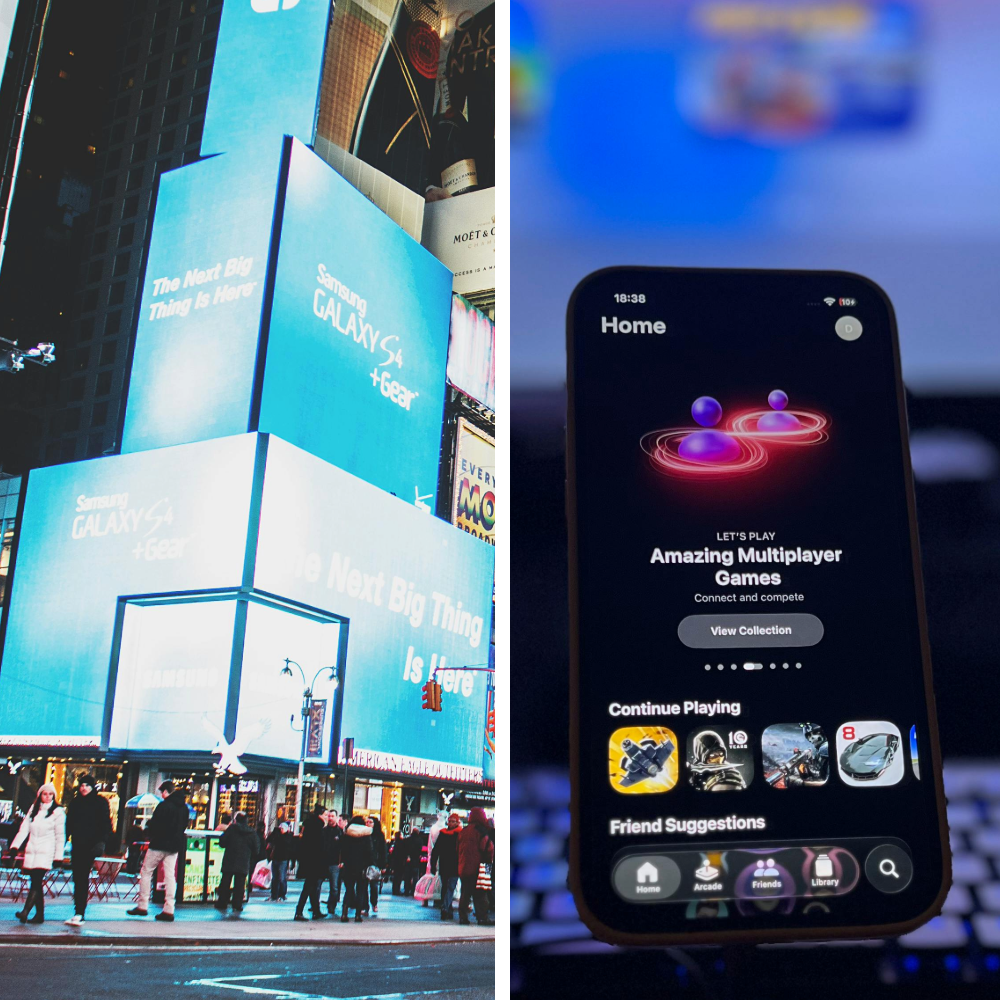
    Smartphones like iPhone and Samsung Galaxy devices use advanced display technologies such as OLED and AMOLED.

    Display Technology

    • iPhone: OLED / Super Retina Display
    • Samsung: AMOLED / Dynamic AMOLED Display

    These displays use self-emitting pixels, meaning each pixel produces its own light. This allows for:

    • Deep blacks
    • High contrast
    • Excellent color accuracy

    Key Features of Mobile LED Displays

    • Small screen size (5–7 inches)
    • Extremely high pixel density (PPI)
    • Designed for very close viewing distance
    • Optimized for battery efficiency
    • Moderate brightness compared to outdoor displays
    • Best for personal, indoor usage

    Mobile displays are engineered to look sharp when viewed from 10–15 inches, making them ideal for phones, tablets, and wearables.

    For more details on smartphone display technology, you can explore:


    What Is a Commercial LED Display Screen?

    Commercial LED displays are large-format screens designed for business and public use. These screens are commonly seen in:

    • Shopping malls
    • Retail stores
    • Corporate offices
    • Events and exhibitions
    • Outdoor advertising billboards

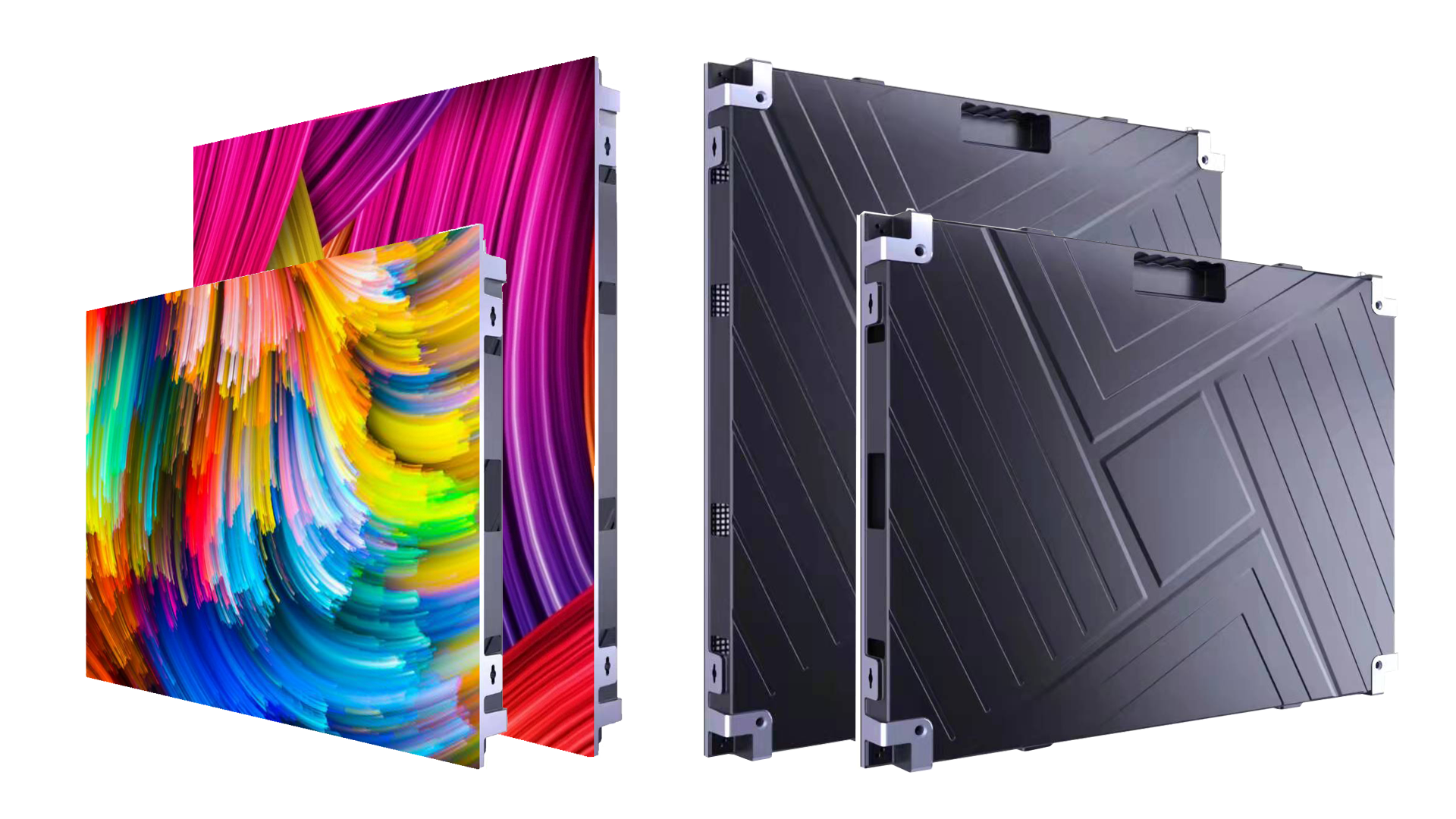
    Unlike mobile screens, commercial LED displays are built using modular LED panels made up of thousands of individual RGB LEDs.

    Key Features of Commercial LED Displays

    • Very large screen sizes (measured in feet, not inches)
    • Optimized for long viewing distances
    • Extremely high brightness (3000–8000+ nits)
    • Built for continuous 24/7 operation
    • Weather-resistant for outdoor use
    • Designed for durability and scalability

    Commercial LED screens prioritize visibility, size, and reliability over ultra-fine resolution.

    If you’re exploring LED solutions for business spaces, you can also check our guide on
    👉 Commercial LED Lighting Solutions


    Mobile LED Display vs Commercial LED Screen: Key Differences

    FeatureMobile LED Display (iPhone / Samsung)Commercial LED Display
    Screen SizeSmall (5–7 inches)Large (10 ft and above)
    Viewing DistanceVery closeMedium to long distance
    Pixel DensityVery high (PPI)Optimized pixel pitch
    Brightness800–2000 nits3000–8000+ nits
    UsagePersonal useAdvertising & branding
    Power SourceBattery-poweredDirect power supply
    DurabilityIndoor use onlyIndoor & outdoor
    Operating TimeLimited daily use24/7 operation

    This difference is why smartphone screens cannot be used for commercial purposes, even though both are called “LED displays.”


    Why Mobile Display Technology Cannot Be Used for Commercial Screens

    Many people ask why companies don’t simply scale up mobile OLED displays for large advertising screens. Here’s why that doesn’t work:

    1. Scalability Issues
      Mobile displays are not designed to be expanded to large sizes.
    2. Cost
      Using OLED technology for large screens would be extremely expensive.
    3. Brightness Limitations
      Smartphone displays are not visible in direct sunlight like commercial LED screens.
    4. Heat & Power Management
      Mobile displays are not built for long-duration usage.
    5. Durability
      Commercial displays must withstand weather, dust, and continuous operation.

    Best Use Cases for Each Type of LED Screen

    Mobile LED Displays Are Best For:

    • Smartphones
    • Tablets
    • Smartwatches
    • Personal entertainment devices

    Commercial LED Displays Are Best For:

    • Retail stores and showrooms
    • Corporate offices
    • Malls and multiplexes
    • Outdoor advertising
    • Events and exhibitions

    If you’re planning LED installations for business environments, explore our custom LED solutions on
    👉 GleamLED

  • Why High-Resolution Indoor LED Video Walls are the Future of Retail in India

    Why High-Resolution Indoor LED Video Walls are the Future of Retail in India

    In 2026, the Indian retail landscape is no longer just about selling products; it’s about creating an immersive “phygital” experience. As brands compete for attention in crowded malls, the indoor led video wall has emerged as the most transformative tool for modern businesses. Whether you are looking for an indoor led video wall and service in india or simply exploring the indoor led wall price in india, understanding the technology behind these displays is key to staying competitive.

    The Power of Pixel Precision

    The demand for sharper, high-contrast imagery has made the indoor led screen price a major point of interest for luxury brands and corporate lobbies. Modern indoor led wall lights are now engineered with smaller pixel pitches, allowing for crystal-clear visuals even from a few feet away. This level of detail is essential for:

    • Fashion Retailers: Showcasing runway footage in motion.
    • Corporate Lobbies: Making a powerful first impression with high-tech, professional displays.
    • Control Rooms: Visualizing critical data with 24/7 reliability.

    Is an Indoor LED Wall Right for You?

    While some businesses still look for a simple indoor led wall lamp or a decorative indoor led wall sconce to set the mood, true commercial impact comes from a full-scale video wall. If you are researching the indoor led wall light options for your office, consider how a seamless display can improve internal communication and brand recall.

    For premium solutions and expert installation, explore the full range of Indoor LED Displays at Gleam LED.


  • Maximizing ROI with Outdoor LED Advertising Display Boards in India

    Maximizing ROI with Outdoor LED Advertising Display Boards in India

    Outdoor advertising is undergoing a digital revolution. Static hoardings are being replaced by dynamic led display wall india solutions that grab attention with moving visuals and real-time updates. If you’ve been searching for a led video wall india or checking the latest led wall display price in india, you already know that digital is the new standard for high-traffic zones.

    Why Digital Billboards Win in 2026

    Traditional signs can’t compete with the outdoor led screen wall India. A digital outdoor led wall allows brands to rotate multiple ads, adjust brightness for sunlight, and even schedule content based on the time of day.

    When comparing an outdoor led wall screen to a static board, the benefits are clear:

    1. High Attention Value: Moving visuals naturally stand out in busy bazaars and highways.
    2. Weather Resistance: Modern outdoor led wall panels are IP65-rated to handle India’s extreme heat and monsoon rains.
    3. Real-Time Flexibility: Update your offers in seconds without the cost of reprinting flex banners.

    Finding the Right Price

    The led video wall display price in india varies based on resolution (pixel pitch) and cabinet material. For those looking for the best led wall display screen price in india, it’s important to look beyond the initial cost and consider the long-term energy savings and lower maintenance of high-quality led video wall indiamart alternatives.

    Ready to transform your outdoor presence? Check out the Outdoor LED Series at Gleam LED to see how we help brands dominate the streets.


  • The Digital Frontier: Why OOH Advertising is Your 2026 Growth Engine

    The Digital Frontier: Why OOH Advertising is Your 2026 Growth Engine

    In an era where digital ad-blocking and “screen fatigue” are at an all-time high, Digital Out-of-Home Advertising has emerged as the most trusted and unmissable way to reach consumers. Unlike online ads that can be skipped or scrolled past, OOH integrates your brand into the physical journey of your customer’s daily life—whether they are commuting to work, shopping at a mall, or traveling through an airport.

    The Power of the “Physical Impression”

    As we look toward 2026, the value of OOH impressions is skyrocketing. Recent studies show that OOH has the highest recall of all ad formats, with nearly 65% of people remembering a brand they saw on a billboard in the last 30 days. It serves as a powerful “media amplifier,” making your existing social media and search campaigns significantly more effective by building real-world trust first.

    The Shift to Digital: DOOH and Better Outputs

    The real transformation is happening in Digital Out-of-Home (DOOH). By switching from static posters to high-resolution LED screens, businesses are seeing a 20% boost in ROI due to several key advantages:

    • Real-Time Flexibility: Update your creative instantly to reflect weather changes, sports scores, or flash sales without any printing costs.
    • Contextual Relevance: Show a coffee ad during the morning rush and switch to a dinner promotion by 5:00 PM.
    • Viral Potential: 3D and anamorphic LED designs are no longer just for big tech. They create “shareable moments” that jump from the physical street to TikTok and Instagram.

    Strategies for 2026 Success

    1. Integrate QR Codes: Turn passive viewing into measurable action by adding a clear call-to-action that viewers can scan.
    2. Focus on Brightness: To combat direct sunlight, ensure your outdoor screens have a brightness of at least 6,500 nits.
    3. Use Strategic Locations: Place your screens at “dwell time” spots—bus shelters, traffic lights, or charging stations—where people have more time to absorb your message.
  • Navigating 2026: The Ultimate Guide to Indoor and Outdoor LED Display Solutions in India

    Navigating 2026: The Ultimate Guide to Indoor and Outdoor LED Display Solutions in India

    As we move into 2026, India’s advertising and corporate sectors are undergoing a massive “digital-first” transformation. With the rise of Smart Cities from Nashik to Surat, LED displays have become the backbone of modern urban communication.

    However, “one size” does not fit all. To get the most out of your investment, you must understand the engineering differences between Indoor and Outdoor solutions.

    1. Indoor LED Displays: Precision and Clarity

    Indoor screens are designed for environments with controlled lighting where viewers are standing or sitting close to the display.

    • Pixel Pitch (Resolution): Indoor screens use a much smaller pixel pitch, typically ranging from P0.9 to P2.5. This ensures that even from a few feet away, the image looks as sharp as a high-definition TV.
    • Visual Performance: 2026 standards prioritize High Refresh Rates (up to 7,680Hz) to ensure visuals are “camera-ready.” This is essential for modern offices and studios where people frequently photograph or film the screen for social media.
    • Applications: Ideal for Corporate Boardrooms, Luxury Retail Stores, Airport Information Displays, and Control Rooms.

    2. Outdoor LED Displays: Power and Durability

    Outdoor screens are engineered for “environmental combat.” They must stay visible under the harsh midday Indian sun and survive extreme weather.

    • Luminous Intensity (Brightness): While indoor screens hover around 1,000 nits, outdoor displays reach 5,000 to 10,000+ nits. This allows them to stay vibrant even in direct sunlight.
    • Ingress Protection (IP Rating): Outdoor units are built with IP65 to IP68+ ratings, making them completely dustproof and waterproof against heavy rain.
    • Pixel Pitch: Because these are viewed from a distance (like a highway or a stadium), they use a larger pixel pitch, typically P4 to P10, which provides a cost-effective way to cover massive surface areas.

    Technical Comparison at a Glance

    FeatureIndoor LED DisplaysOutdoor LED Displays
    Pixel Pitch0.6mm – 2.5mm (Ultra Fine)4.0mm – 10.0mm (Standard)
    Brightness600 – 1,500 nits5,000 – 10,000+ nits
    ProtectionBasic (IP20/IP30)Weatherproof (IP65+)
    MaintenanceFront/Rear AccessibleOften Front Serviceable for ease

    3. The Smart City Advantage: 2026 Trends

    In late 2025, we are seeing a massive surge in Variable Message Displays (VMD) and Intelligent City Surveillance systems.

    • AI Integration: Modern screens now use AI to auto-adjust brightness based on ambient light, saving significant energy costs.
    • IoT Connectivity: Screens in smart hubs like Thane and Bengaluru are now integrated with emergency response systems and environmental sensors to show real-time AQI and traffic alerts.
    • Sustainable Tech: New COB (Chip-on-Board) technology is reducing power consumption by up to 40%, making digital signage an eco-friendly alternative to traditional printed vinyl.

    Conclusion: Choosing Your Solution

    The best LED display is the one that matches your specific environment and viewing distance. At Gleam LED, we provide end-to-end solutions—from technical site surveys to professional installation—ensuring your indoor or outdoor display performs perfectly for years to come.

    Ready to illuminate your business?

    Contact Us Now

  • The New Era of Outdoor Advertising: A Strategic Guide for Digital Growth

    The New Era of Outdoor Advertising: A Strategic Guide for Digital Growth

    In a world saturated with digital ads, Outdoor Advertising (OOH) remains one of the few mediums that cannot be skipped, blocked, or muted. Across the globe, the landscape is shifting from static boards to Digital Out-of-Home (DOOH), a sector now commanding nearly half of the total outdoor market share in major urban centers.

    For businesses looking to scale, understanding the technical and strategic shifts in outdoor displays is essential. Here is a guide to the current trends and high-impact locations for modern digital advertising.

    1. From Static to “Smart” Billboards

    The traditional “hoarding” has evolved. Modern digital platforms allow brands to run dynamic content that can change based on the time of day, local weather, or real-time trending topics.

    • The Advantage: One physical site can now host multiple advertisers on a loop, making prime locations more accessible for various brands.
    • Real-time Flexibility: Cloud-based systems enable brands to update their messaging instantly, which is critical for time-sensitive promotions.
    • Industry Insights: Explore the latest Global DOOH Market Data via Statista.

    2. High-Impact Locations: Beyond the Main Roads

    While major expressways and high-traffic arterial roads remain iconic for mass reach, new premium “touchpoints” are emerging as the preferred choice for targeted engagement:

    • Transit Hubs: International airports and metropolitan railway stations are the fastest-growing segments. These hubs offer “high dwell time,” where passengers are more likely to engage with high-definition interactive screens while waiting.
    • Retail & Luxury Malls: Modern shopping centers capture consumers exactly when they are in a “buying mindset.” Digital displays in these areas are highly effective for driving immediate foot traffic to nearby stores.
    • Smart City Infrastructure: Digital kiosks and modern bus shelters are bringing high-definition video loops into the heart of suburban communities, shrinking the gap between urban and residential advertising.

    3. The Technical Essentials for Performance

    To ensure an outdoor investment delivers results, focus on these three critical technical standards:

    • Camera-Ready Refresh Rates: With almost every consumer carrying a smartphone, screens must look perfect on camera. A refresh rate of ≥3840Hz prevents the “scan lines” that often ruin photos of LED screens on social media.
    • Extreme Weather Resilience: Outdoor screens must fight intense heat and heavy rain. Hardware with an IP65 waterproof rating and high-brightness modules (up to 7000 nits) ensures content remains vibrant even under direct sunlight.
    • Technical Standards: Understand International IP Ratings for Electronics via the International Electrotechnical Commission.

    4. Navigating the Legal & Safety Landscape

    Professionalism in outdoor advertising means staying compliant with local regulations. This involves:

    • Structural Safety: Large-scale LED installations must be certified by structural engineers to ensure they can withstand high wind pressures and environmental stress.
    • Content Ethics: Advertisements should follow professional codes of conduct, such as the guidelines provided by the Advertising Standards Council of India (ASCI).
    • Municipal Permits: Every city has unique bylaws regarding brightness levels and placement to ensure public safety and minimize driver distraction.

    Conclusion: Making a Lasting Impression

    Outdoor advertising is no longer just about visibility—it’s about engagement and precision. By combining high-resolution technology with strategic placement, businesses can achieve a brand recall that digital-only campaigns simply cannot match.