Introduction
Chip-on-Board (COB) LED technology represents a significant evolution in how LEDs are packaged and integrated into modern LED display screens. As LED displays move toward higher pixel densities and closer viewing distances, manufacturers continue to refine LED packaging methods to improve visual uniformity, durability, and surface protection. COB technology changes how LED chips are mounted and protected on display modules, which directly affects display performance in practical applications.
If you’re comparing options for an indoor LED video wall, COB is worth considering for close-viewing environments—see our WP Series indoor display for typical commercial setups.
This article explains what COB LED technology is, how it differs from traditional LED packaging approaches, and how it improves the performance of LED display screens in commercial and professional environments.
What Is Chip-on-Board (COB) LED Technology?
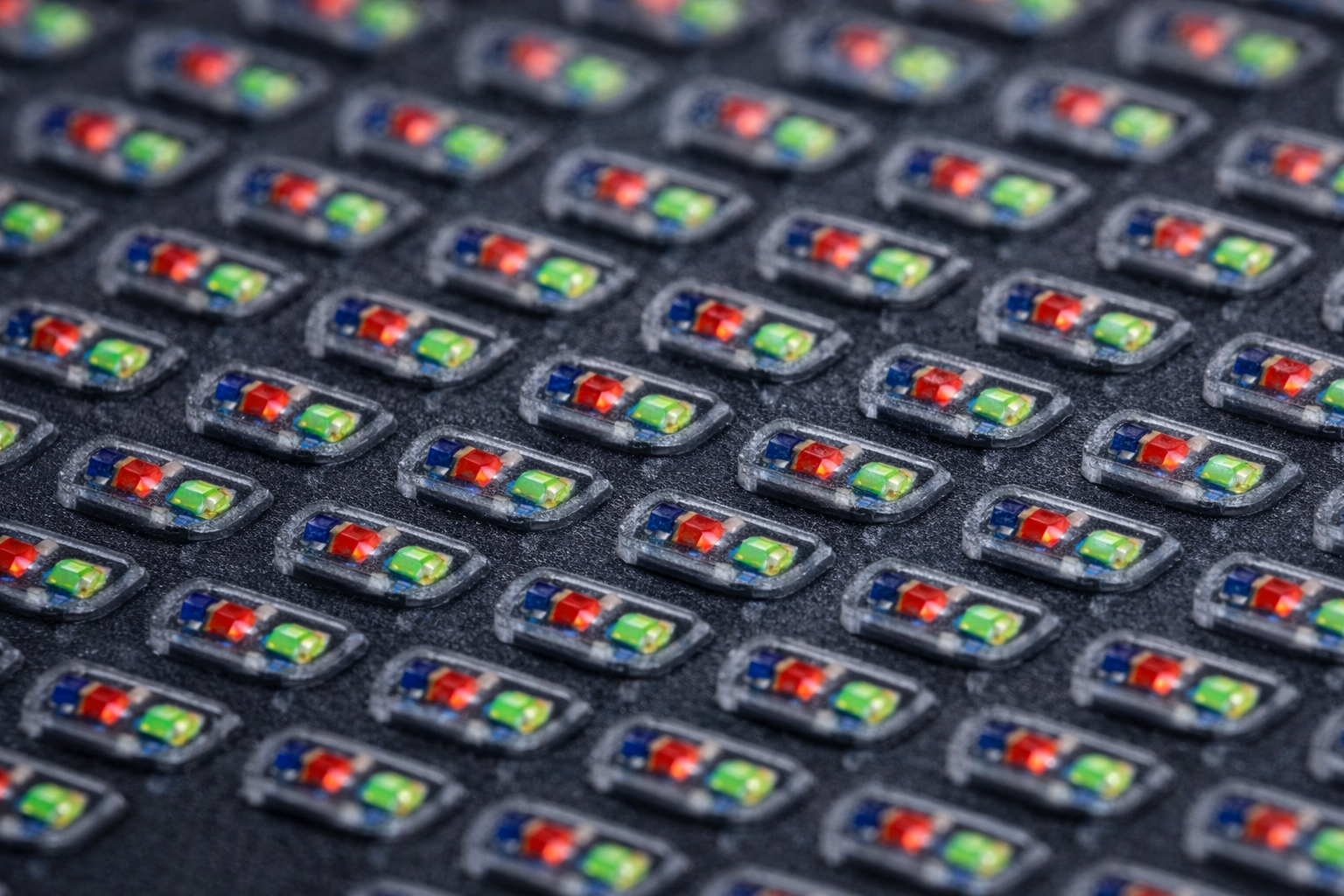
Chip-on-Board (COB) technology mounts bare LED chips directly onto a substrate and encapsulates them with a protective resin layer. Instead of packaging each LED chip individually, COB integrates multiple chips into a single compact light-emitting surface. This approach reduces physical spacing between light sources and creates a smoother display surface.
COB packaging improves mechanical protection and allows LEDs to operate as a more uniform light source. For a technical overview of COB LED technology in display applications, refer to this resource from ViewSonic:
https://www.viewsonic.com/library/tech/what-is-cob-led-technology/
How COB Differs from Traditional LED Packaging
Most conventional LED display screens use Surface-Mounted Device (SMD) LEDs, where each LED chip is individually packaged and soldered onto a circuit board. COB technology differs in several important ways:
- Direct chip mounting: LED chips are mounted directly onto the board
- Encapsulated surface: A resin layer protects the entire LED array
- Reduced pixel gaps: Smaller spacing between light sources improves visual smoothness
- Improved physical protection: Encapsulation shields chips from dust and minor impact
A more detailed explanation of how COB packaging is implemented at the electronics level can be found in this overview by PCB-Technologies:
https://www.pcb-technologies.com/applications/chip-on-board/
How COB Technology Improves Visual Performance
Smoother Visual Surface
By reducing the physical gaps between individual LEDs, COB modules create a flatter and more continuous light-emitting surface. This makes images appear smoother and less pixelated, particularly in high-resolution displays viewed from close distances.
Improved Contrast and Reduced Glare
The encapsulated surface used in COB modules helps reduce surface reflections and light scattering. This leads to better contrast and lower glare, which improves viewing comfort in brightly lit indoor environments.
Enhanced Color Uniformity
COB packaging promotes more consistent light distribution across the display surface. When combined with calibration, this results in more uniform color reproduction across large LED video walls.
Durability and Surface Protection Benefits
COB LED displays provide better mechanical protection than traditional LED modules. The protective resin layer covers the LED chips, reducing exposure to dust, moisture, and accidental contact. This improves resistance to surface damage and helps maintain consistent performance over time.
The encapsulation process used in COB packaging also reduces the risk of individual LED chips becoming dislodged or damaged. For a practical explanation of how COB assemblies are manufactured, this SparkFun tutorial provides useful insight:
https://learn.sparkfun.com/tutorials/how-chip-on-boards-are-made/all
Thermal Management Considerations
Effective heat dissipation is critical for LED longevity and stable brightness performance. COB LED modules are designed with thermal pathways that distribute heat more evenly across the substrate. This helps:
- Maintain consistent brightness
- Reduce thermal stress on individual LED chips
- Support longer operational lifespans
Thermal management remains an important consideration in both indoor and outdoor LED display designs, although COB technology is most commonly applied in controlled indoor environments.
Where COB LED Displays Are Commonly Used
COB LED technology is primarily used in high-resolution indoor LED displays where close viewing distances and visual smoothness are important. Typical applications include corporate lobbies, control rooms, broadcast studios, and experience centers.
In contrast, outdoor LED advertising displays focus more on extreme brightness and weather resistance, which is why traditional LED packaging methods remain more common in large-format outdoor billboards.
Practical Considerations and Limitations
While COB LED technology offers clear advantages, it also introduces practical considerations:
- Higher manufacturing complexity
- Different repair and maintenance procedures
- Higher cost per square meter in some cases
- Limited adoption in large outdoor environments
These factors influence where COB technology is most appropriate within LED display applications.
COB Technology in the Broader LED Display Ecosystem
COB represents one of several LED packaging approaches used in modern display systems. Its growing adoption reflects demand for smoother visuals, higher pixel density, and improved surface durability in premium LED display environments. As LED display technology evolves, packaging innovations like COB continue to shape how displays perform and how viewers experience digital content.
Conclusion
Chip-on-Board (COB) LED technology improves LED display performance by enhancing visual uniformity, surface durability, and overall viewing comfort. By mounting LED chips directly onto a substrate and encapsulating them within a protective layer, COB displays achieve smoother visuals and greater resilience in close-viewing environments. While COB technology is primarily used in high-resolution indoor LED display screens, it plays an increasingly important role in the broader evolution of LED display technology.