Introduction
LED screen displays have become a common part of modern visual communication, appearing in outdoor advertising, retail environments, corporate spaces, and public infrastructure. While most people interact with these screens daily, fewer understand how LED displays actually produce images and videos. This article explains how LED screen displays convert electrical signals into clear, full-color visuals using pixel-level control and modular design.
What Makes an LED Screen Different from Traditional Displays?
Unlike LCD or projection systems, LED screen displays generate light directly from individual light-emitting diodes. Each pixel on an LED display emits its own light rather than relying on a backlight. This fundamental difference allows LED screens to achieve higher brightness, better contrast, and improved visibility in both indoor and outdoor environments.
Understanding Pixels in an LED Screen Display
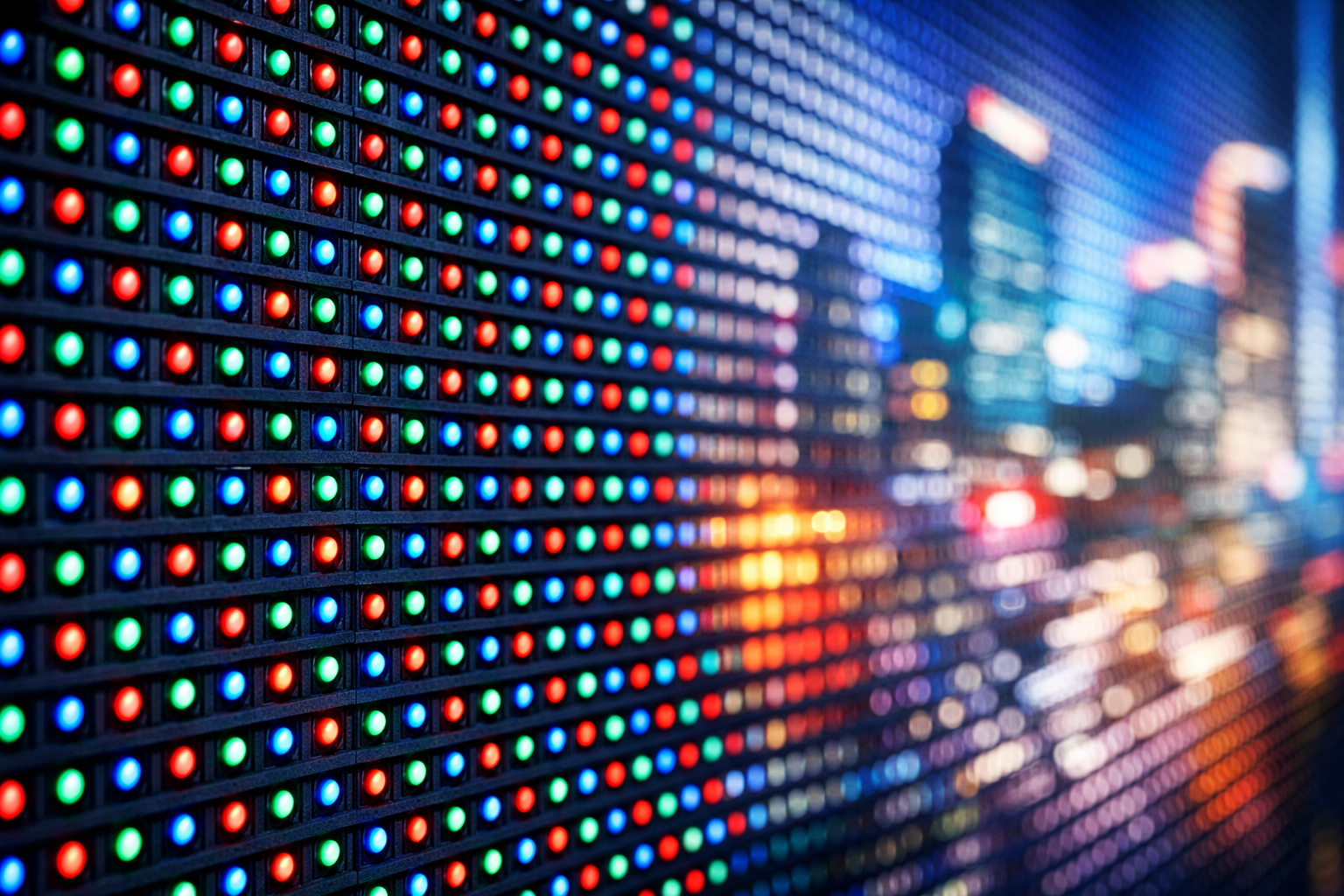
An LED screen display is made up of thousands or millions of pixels. Each pixel consists of three tiny LEDs:
- Red
- Green
- Blue
By adjusting the brightness of these three colors at different intensities, the display produces a wide range of colors. When viewed together at normal distances, these individual pixels blend seamlessly into a single image.
How Images Are Formed on an LED Screen
Images and videos displayed on an LED screen originate from a digital source such as a media player or computer. The control system processes this content and sends precise electrical signals to each pixel. These signals determine:
- Which pixels turn on
- What color each pixel displays
- How bright each pixel appears
This process happens continuously and at high speed, allowing LED screens to display smooth motion, animations, and video playback.
Role of LED Modules in Large Displays
Large LED screen displays are constructed using smaller units known as LED modules. These modules fit together to form a complete screen of any size or shape. This modular design allows LED displays to scale easily, making them suitable for applications ranging from small indoor video walls to massive outdoor advertising screens.
Why LED Displays Perform Well in Outdoor Environments
Because LED pixels emit their own light, LED screen displays maintain visibility even in bright sunlight. Outdoor LED displays are designed with additional protective layers and brightness levels to ensure consistent performance in challenging conditions such as heat, dust, humidity, and rain.
Color Accuracy and Brightness Control
Modern LED screen displays use advanced calibration techniques to ensure uniform color and brightness across the entire screen. This is especially important for large installations where visual consistency affects image quality and viewer perception.
Where This Technology Is Commonly Used
LED screen display technology is widely applied across retail environments, corporate offices, and control rooms, where indoor LED displays deliver high-resolution visuals for close viewing and detailed content presentation.
Conclusion
LED screen displays communicate images by controlling millions of light-emitting pixels with precision and speed. By combining pixel-level color control, modular construction, and direct light emission, LED display technology delivers high-impact visuals across a wide range of environments. Understanding how LED screens work helps businesses and organizations better appreciate the technology behind modern digital displays.