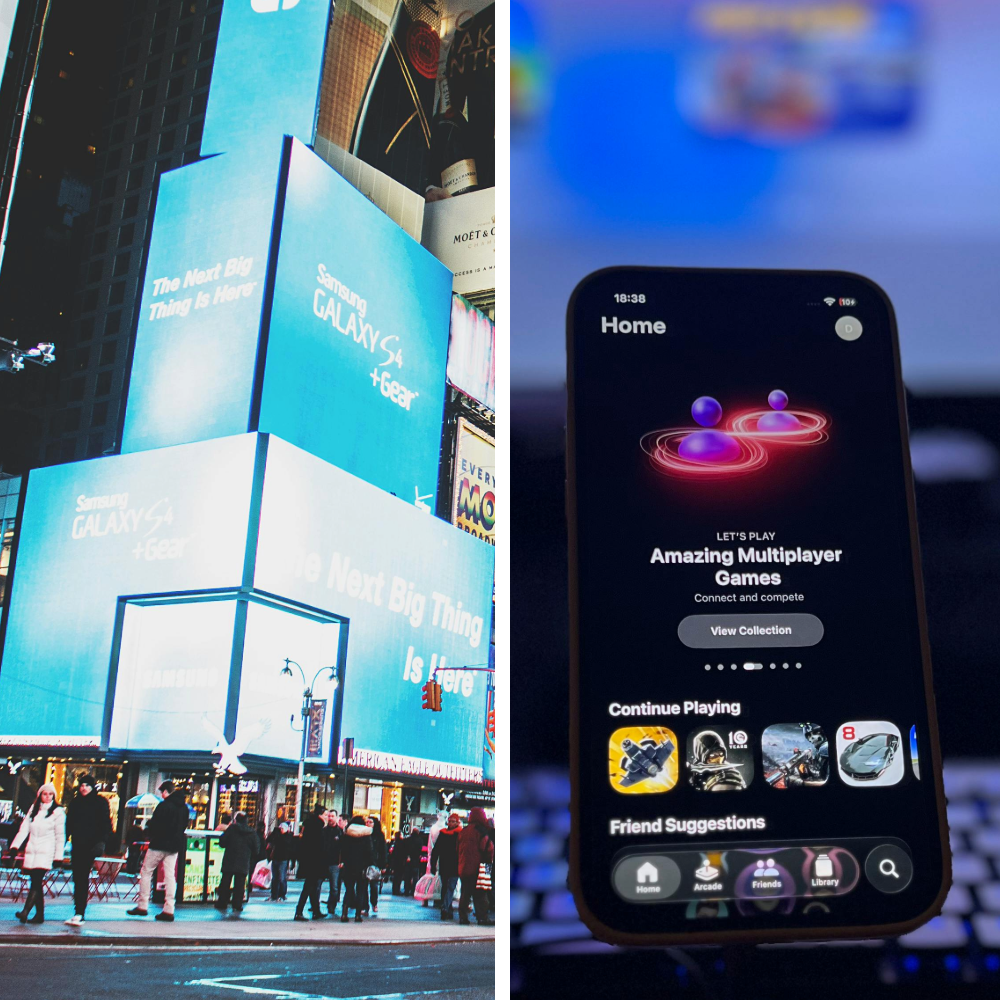
LED screens are everywhere today — from the smartphone in your hand to massive digital screens in malls, offices, and outdoor billboards.
At first glance, it may seem like the LED screen used in an iPhone or Samsung mobile is similar to a commercial LED display. However, both technologies are designed for completely different purposes.
In this blog, we’ll clearly explain the difference between mobile LED displays and commercial LED screens, so you can understand why they are not interchangeable and where each one is best used.
LED Displays Used in iPhone & Samsung Mobiles
Smartphones like iPhone and Samsung Galaxy devices use advanced display technologies such as OLED and AMOLED.
Display Technology
- iPhone: OLED / Super Retina Display
- Samsung: AMOLED / Dynamic AMOLED Display
These displays use self-emitting pixels, meaning each pixel produces its own light. This allows for:
- Deep blacks
- High contrast
- Excellent color accuracy
Key Features of Mobile LED Displays
- Small screen size (5–7 inches)
- Extremely high pixel density (PPI)
- Designed for very close viewing distance
- Optimized for battery efficiency
- Moderate brightness compared to outdoor displays
- Best for personal, indoor usage
Mobile displays are engineered to look sharp when viewed from 10–15 inches, making them ideal for phones, tablets, and wearables.
For more details on smartphone display technology, you can explore:
What Is a Commercial LED Display Screen?
Commercial LED displays are large-format screens designed for business and public use. These screens are commonly seen in:
- Shopping malls
- Retail stores
- Corporate offices
- Events and exhibitions
- Outdoor advertising billboards
Unlike mobile screens, commercial LED displays are built using modular LED panels made up of thousands of individual RGB LEDs.
Key Features of Commercial LED Displays
- Very large screen sizes (measured in feet, not inches)
- Optimized for long viewing distances
- Extremely high brightness (3000–8000+ nits)
- Built for continuous 24/7 operation
- Weather-resistant for outdoor use
- Designed for durability and scalability
Commercial LED screens prioritize visibility, size, and reliability over ultra-fine resolution.
If you’re exploring LED solutions for business spaces, you can also check our guide on
👉 Commercial LED Lighting Solutions
Mobile LED Display vs Commercial LED Screen: Key Differences
| Feature | Mobile LED Display (iPhone / Samsung) | Commercial LED Display |
|---|---|---|
| Screen Size | Small (5–7 inches) | Large (10 ft and above) |
| Viewing Distance | Very close | Medium to long distance |
| Pixel Density | Very high (PPI) | Optimized pixel pitch |
| Brightness | 800–2000 nits | 3000–8000+ nits |
| Usage | Personal use | Advertising & branding |
| Power Source | Battery-powered | Direct power supply |
| Durability | Indoor use only | Indoor & outdoor |
| Operating Time | Limited daily use | 24/7 operation |
This difference is why smartphone screens cannot be used for commercial purposes, even though both are called “LED displays.”
Why Mobile Display Technology Cannot Be Used for Commercial Screens
Many people ask why companies don’t simply scale up mobile OLED displays for large advertising screens. Here’s why that doesn’t work:
- Scalability Issues
Mobile displays are not designed to be expanded to large sizes. - Cost
Using OLED technology for large screens would be extremely expensive. - Brightness Limitations
Smartphone displays are not visible in direct sunlight like commercial LED screens. - Heat & Power Management
Mobile displays are not built for long-duration usage. - Durability
Commercial displays must withstand weather, dust, and continuous operation.
Best Use Cases for Each Type of LED Screen
Mobile LED Displays Are Best For:
- Smartphones
- Tablets
- Smartwatches
- Personal entertainment devices
Commercial LED Displays Are Best For:
- Retail stores and showrooms
- Corporate offices
- Malls and multiplexes
- Outdoor advertising
- Events and exhibitions
If you’re planning LED installations for business environments, explore our custom LED solutions on
👉 GleamLED